
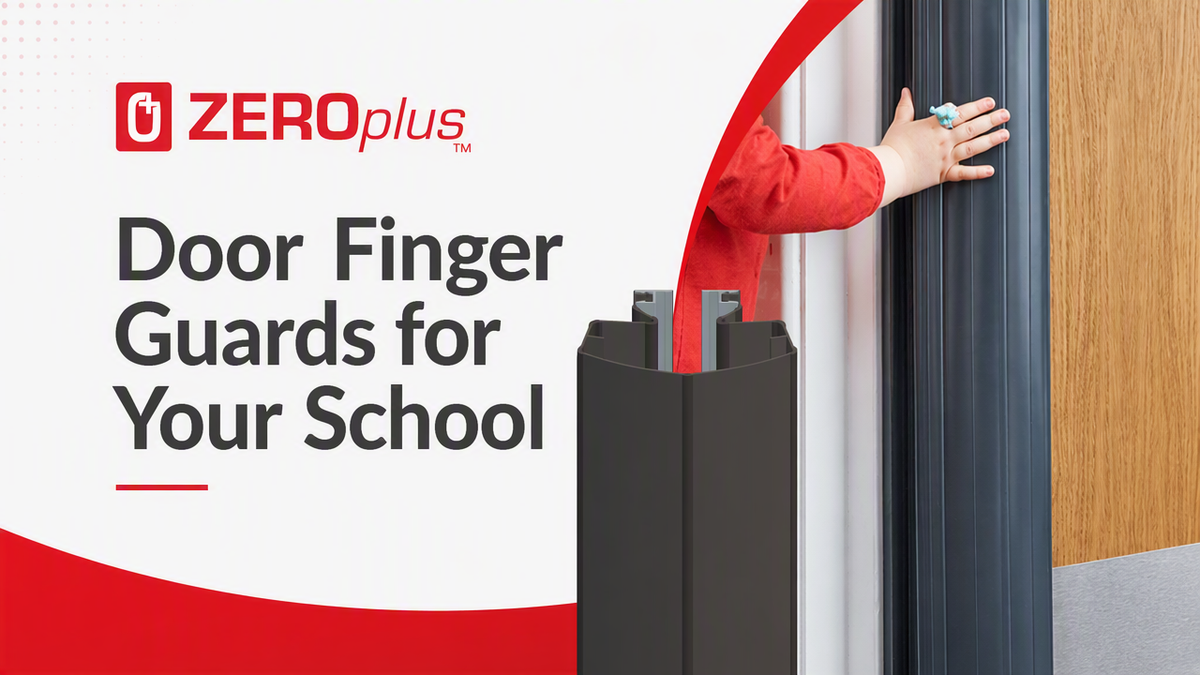
Schools are notoriously chaotic. Between bell rings, hundreds of children rush through corridors, pushing past heavy doors without looking where they put their hands and without door finger guards it only takes a split second for a routine dash outside to turn into a trip to A&E.
According to RoSPA, around 30,000 people crush their fingers in doors across the UK every year. Over 1,500 of those incidents are severe enough to need surgery, and children make up the majority of those cases.
Installing door finger guards on the hanging side of your school doors removes that hazard and potential injury risk. Easy to fit door hinge finger guards are a straightforward fix for a problem that costs schools and children dearly in downtime and distress.
What Are the Regulations for Schools?
If you’re the designated Responsible Person for your school building, finger safety falls squarely on your desk. Health and safety assessments require you to identify areas of risk and take reasonable measures to eliminate them.
Safety guidelines recommend fitting door finger guards to the hanging side of all doors accessible to children. At a minimum, this covers:
- · Foundation stage and Key Stage 1 classrooms
- · Corridors and main thoroughfares
- · Toilets and washrooms
- · Playgroup and after-school club spaces
Leaving hinge gaps exposed in these areas opens the school up to avoidable problems if an injury occurs.
Door Finger Guards & the Fire Door Trap
Most school corridor doors are fire doors, and you can’t simply stick any plastic finger guard strip onto a fire door, as any hardware added to a fire door must maintain the door's certified rating. If you fit an untested door hinge protector, you risk invalidating the door's fire integrity.
To stay compliant, your door hinge finger guards must hold independent third-party certification to BS EN 1634-1:2014. This standard proves the guard maintains fire resistance regardless of which side the fire starts on.
The Ellen Finprotect Plus range meets this standard, providing fire integrity for up to 120 minutes on timber doorsets and up to 240 minutes on steel doorsets.
Why Quality Hardware Matters in Education
School hardware takes a beating. Flimsy safety strips can crack quickly, leaving sharp edges and no protection.
When you evaluate a door hinge protector for high-traffic school environments, look for two things: impact resistance and cycle testing.
Finprotect Plus guards are tested to Class 2 of BS 8613:2017, which means the guard stops fingers from entering the hinge gap even when someone forces the door shut.
Key specs of the Ellen Finprotect Plus range for school site managers to know:
- · Tested to 1,000,000 opening cycles for long-term durability
- · Quick installation using six Torx screws per side
- · Concealed fixings to prevent student tampering
- · Profiles available for standard hinged doors and double-action pivot doors
- · Synthetic rubber inserts that slots into rigid aluminium channels
- · Finishes to match existing frames: white, black, brown, light grey, and anthracite
Fixing options cover every door type in your facility and we offer standard screws for timber, self-tapping screw packs for metal frames, and heavy-duty adhesive kits for glass, composite, or PVCu doors.
Upgrade Your School's Door Safety
Finger trapping injuries are preventable. Fitting heavy-duty, fire-rated door finger guards across your classrooms and hallways protects your pupils, keeps your site compliant with safety audits, and gives parents peace of mind.
Explore our full range of door finger guards today or give our customer care team a call on 01785 282 910 to discuss specs and quantities for your school.
Frequently Asked Questions
Are door finger guards a legal requirement in UK schools? The designated Responsible Person for a school building must manage and reduce the risk of finger-crushing injuries under health and safety legislation. While the law mandates risk management rather than specific products, standard guidance requires door finger guards on the hanging side of doors in Foundation and Key Stage 1 areas, corridors, and toilets. Failing to protect these risk areas leaves schools exposed to severe injury claims.
Can you fit a door hinge protector on a fire door? Yes, but the protector must carry certified fire test credentials. Any hardware installed on a fire door must not compromise the door's ability to resist fire and smoke. Choose a door hinge protector tested to BS EN 1634-1:2014. Products like the Finprotect Plus range provide up to 120 minutes of fire integrity on timber doors and up to 240 minutes on steel doorsets.
What British Standard applies to door hinge finger guards? Look for BS 8613:2017. Specifically, choose devices tested to Class 2 of this standard. Class 2 certification means the door hinge finger guards successfully block fingers from slipping into the hinge gap even when someone forces the door shut.
Which doors in a school need a door finger protector? Prioritise doors in Foundation Stage and Key Stage 1 classrooms, main corridors, student toilets, dining halls, and after-school club rooms. External entrance doors and heavy double-action pivot doors also present high entrapment risks and should have heavy-duty protection fitted.
Can door finger guards be fitted to glass, PVCu, or metal doors? Yes. Quality systems adapt to different frame types using specific mounting kits. While timber doors use standard wood screws, you can fit guards to aluminium and steel doors using self-tapping screws. For glass, PVCu, and composite frames, heavy-duty high-tack adhesive strips provide a secure hold without drilling into the frame.